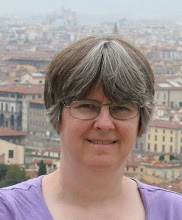
OK, so I joined Facebook about a month ago, just to see what it was all about, since everyone has been talking about it. I'm still not convinced it's anything other than yet another potential time-waster for me. But it has been fun to reconnect with some old acquaintances. I decided to put a link here (in the right sidebar), so you can go and check it out and see if you want to join my circle of friends. The photo I used for my Facebook profile is a composite of one that I took of myself in my bathroom mirror (flipped in Photoshop so the word "Canon" on my camera wouldn't be backwards) with a scene I shot in New Zealand of Mount Ruapehu, a volcano.
Showing posts with label location: New Zealand. Show all posts
Showing posts with label location: New Zealand. Show all posts
19 July 2007

18 July 2007
Reflection on reflection
 I was looking back through my New Zealand photos to see if there were any good ones I hadn't used yet. This older gentleman agreed to let me photograph him to get the photo of the stunning backdrop reflected in his sunglasses. I like the way you can see the crows' feet on his cheek blending into the hillside in the reflection, looking as if they were ripples in the ground. There happened to be a photographer in the middle of the gorgeous scenery, but I didn't Photoshop her out. An incidental self-portrait.
 Here's that same scene as it appeared unreflected, from a slightly different angle. I'd say the image in the man's lens is a pretty good likeness. Doesn't this just make you want to go there?! This photo was taken on one of the islands in the Bay of Islands. Sorry, I can't remember which one. But if you take the "Best of the Bay" boat cruise (the original "Cream Trip") offered by Fullers Bay of Islands, departing from Paihia, you'll get to see this and other beautiful sights.
OK, so this didn't turn out to be much of a reflection, but more of a sales pitch. Honest, I have nothing to gain from it, other than the knowledge that you too might be able to get some cool photos of dolphins, etc.
22 June 2007
Popular Photography
No, not the magazine by that name. I'm talking about Nikon's brilliant marketing campaign, Picturetown. They gave 200 D40 digital cameras to 200 random people of Georgetown, South Carolina, to prove that anyone can take great pictures if they have the right camera. It doesn't completely invalidate the time-worn photographers' adage that it's not the camera, it's the photographer (which Michael Reichmann of The Luminous Landscape rightly points out is not really true anyway -- there are many factors, including the photographer and the camera). But Kodak's advertising sure attempts to blur the line between professionals and amateurs. Is there a line anyway? Or is it more a continuum?
Some of the photos showcased on that site are indeed quite nice and aesthetically composed. Others are very sharp and have good colors but are still just snapshots. Nothing wrong with "just snapshots," mind you -- in fact I think it's wonderful that more people can now take photos of their family members, pets, vacations, etc., that they are pleased with. It might take some business away from professional portrait photographers, but there is still room for us artsy types. And perhaps as good photography becomes even more accessible to the general public, more people will find the aesthetic element in it draws them to learn more and increase their skill, which I think will increase the joy they derive from doing it. That would be a good thing. Some photographers might grumble at the thought of more competition. But when one views the process of doing art and the pleasure derived from it as half or more of the benefit of doing it (beyond the money you can earn or the positive reactions you get from other people viewing your results), then it's easier to have an abundance mentality rather than a scarcity mentality. “People with a scarcity mentality tend to see everything in terms of win-lose. There is only so much; and if someone else has it, that means there will be less for me. The more principle-centered we become, the more we develop an abundance mentality, the more we are genuinely happy for the successes, well-being, achievements, recognition, and good fortune of other people. We believe their success adds to...rather than detracts from...our lives.” (Stephen Covey)
 So how does my photo of the day (above left) compare to the dolphin shot (right) by "Picturetown" resident Mark Collins, who admits he's "pretty much a novice at this"? (The Picturetown site has a feature where you can download any of the photos there, so I'm sure I'm not doing anything illegal by reproducing it here; however, I'm giving credit to the photographer and a link to the original just to be sure. See the Picturetown site for a video containing Mark's comments on how he got the shot, which is where I got the quote about his self-assessment of his skills.) My photo is better, I think. I like that it's more saturated and shows the motion of the dolphins better. His is too bland and too static for my taste, however he does have a nice repetition of curves, and he caught the fin of the baby between the adults. And he was closer. Even though my photo is probably better, I'm not sure I really have enough of an edge over this novice with a free camera from Nikon to make much of a stink about "it's the photographer, not the camera." After all, I've got a better camera... ;-)
18 May 2007
Calla lily
 Another one of my New Zealand flowers series. It's not a New Zealand native, but I saw it and photographed it there, in Hamilton Gardens.
16 May 2007
Iris
 I love irises. They are probably about my favorite flower. There are all kinds of symbolic and theological reasons I like them (three petals like the Trinity, purple a royal color, Iris in Greek mythology, etc.), but the bottom line is they are just plain beautiful, and I love purple. Here's a photo I took of an iris down in New Zealand which I've Photoshopped a bit to simplify and colorize the background. If you think that's cheating, then so is painting. I'm just using different tools to create the look I want.
11 February 2007
Gannet domestic violence
 Now you see the real reason why gannets build their nests just beyond pecking distance from each other! This one seemed a bit angry that its space was encroached upon. Or maybe it was a couple having a marital spat. See how the others are looking on to see what all the fuss is about.
On Friday I just dropped off two framed enlargement prints of two photos which I've featured here on the blog ("Jesus of the Hoops" and "Faith of a Child") for the annual Regent Community art exhibit at the Lookout Gallery at Regent College. The exhibit opens next Wednesday.
I also am psyched that I finally bought a mat cutter for myself, a Logan 750 SimplexPlus. I took a matting and framing course last year, but have not until now been able to really do the whole process myself at home.
09 February 2007
More gannets, and still more gannets!
 Australasian gannets space their nests evenly apart, just beyond pecking distance from one another. It was quite a sight to behold -- hundreds of gannets sitting on nests on this cliff ledge. I had a pretty good view of it looking down from above where the trail climbed to a point higher up on the bluff. This was taken with a 70mm focal length.
05 February 2007
Watery flower
 That title reminds me of the ever-changing anagram sign in the Fawlty Towers TV series. You gotta see it.
Anyway, I never did get a satisfactory answer on what this New Zealand flower is. It might be some sort of orchid-like gladiolus hybrid (Gladiolus callianthus crossed with something else).
02 February 2007
Gannet in flight
 I'm waiting for the ID of another New Zealand flower photo I wanted to post tonight, so instead I'll go back to gannets. I will let you in on a little secret. The sky was totally grey and boring on the day I shot this. So the sky in this photo is painted in with Photoshop using the gradient tool. Not bad, eh? You'd be hard-pressed to find any artifacts from the editing. I used the smudge tool to touch up the edges where the sky met the bird in a couple of places where it was obvious (where the bird's color contrasted least with the sky color, i.e., around his tail and at the back of his head/neck).
My photographer friend Paul Butzi says you can learn about the world through doing photography, and that's one of the main reasons he does photography. I learned some things about gannets by photographing them that day at Muriwai Beach, though to really learn more about them, I'd need to spend days around them photographing them. And I also think one needs to supplement the photography with something else, some sort of research into what other people have learned about them and how they have classified them. For example, I'd really like to know what those white feathers are called at the trailing edge of his wings, near the root of the wing (inside where the black feathers start). I'm sure there's a name for them. There seems to be a name for everything biological. I wanted to describe to you how that was one of the edge spots that I edited with Photoshop, but I didn't know the word to use. I could look it up in one of my birding books, but they are all still packed away from my move. If anyone happens to know the word, please post it here in the comments. I did a quick search in Google, but this chart I found doesn't seem to give me the answer that I think must exist.
01 February 2007
A rose by any other name...still has aphids
 Click on the photo to view the full-size version so you can see the little critter below the largest drop of water near the center of the photo. This was taken with a 200mm lens and a macro filter.
This could be from anywhere, but it happens to be New Zealand. My Kiwi friend (who is also a photographer and a very wise person) pointed out, after seeing the photos I'd taken during the first couple of weeks of my trip, that most of the time I was focused on small things that could have been anywhere, and I wasn't really taking in my environment. I wasn't seeing. She was right, as I learned on another occasion when I was looking left and right for her in a field up ahead of me and she was right in front of me! I did shift my gaze during the remainder of the trip, to look up and around me at the trees and the landscape. But I still am primarily a close-up photographer, I discovered. I love the details, the things other people often don't see. You've probably figured that out by now if you've been following this blog for a while.
27 January 2007
Black swans with cygnets
 Another in the New Zealand series. I'd never seen a black swan before, but they were all over the place on the lakes in the Rotorua area. I took lots of photos of this family, trying to get one with the parents' necks lined up just right so they were in the shape of a heart enclosing their babies. I did get one like that, but in the end I liked this one better. Sometimes perfect symmetry works in a photo; more often a little asymmetry is better.
22 January 2007
Cymbidium Orchid: Keeping Notes and Trade-Offs
 People are enjoying my New Zealand series, so I'm going to continue with it for a while.
I saw this orchid at Hamilton Gardens, in the Waikato region in the center of NZ's North Island. (That's where I photographed the mallard from the other day, too, BTW.) I had to go to my favorite plant identification forum to ask what kind of orchid this is, since I neglected to find that detail out while I was there. I was rewarded quite quickly with the info that it's a cymbidium of some sort. There are lots of different varieties and hybrids of cymbidium, but many of them are really hard to tell apart, so that's close enough for me. It's more than what I'd written down at the time I took the photo. (Aside: Always collect whatever identification information you can about your photos, especially flora and fauna, in case you ever find yourself wanting to publish them. Even if you never think you would do such a thing, note-taking -- and follow-up research if necessary -- is a great way to learn about the natural world, like the age-old practice of keeping a nature or field journal. I keep a small ruled Moleskine notebook in my camera bag to record such details, though I confess I haven't used it much since my New Zealand trip.)
This photo is an example of where I've had to make a trade-off in depth of field. I wanted the blossoms to stand out, which I would do by making the green background blurry to eliminate distracting detail. But narrowing the depth of field to achieve that selective focus meant that the flowers near the top (which were farther back from the plane of the camera) are a bit out of focus. The standard solution for this problem would have been to adjust my vantage point so that the blossoms were all about the same relative distance from the lens. But compositionally that wouldn't have been as interesting a photo, I think. In any event, the blossoms are close enough to the leaves, that with the lens I was using that day, it would have been near impossible to isolate them entirely with depth of field. So I had to choose a happy medium between having them all in focus and making them burst forth from the background. Photography is all about trade-offs.
19 January 2007
Another New Zealand bird
 This one is a mallard, common throughout the world, not a particularly unique New Zealand species like so many of the ones I saw down there. But I like the photo for its colors and the ripples in the water. I wish I'd been able to crop it so the bird was just entering the frame rather than just leaving it. It is better to include the spot where your subject is about to be in a few seconds rather than where it has just come from. It makes the photo somehow more "readable" -- you can imagine lingering over the scene for a while. But if the subject is on the edge about to leave the frame, it's the end of a story.
However, in this case, the reasons I chose to do it this way were twofold: first there was some ugly stuff in the water directly above and to the left of the duck that I wanted to crop out; and second, the interesting colors and movement going on in the water were below and to the right of the duck. So I was stuck. To ameliorate the negative effect of having the subject about to leave the frame, I've placed the photo on the right of the text.
This one benefits greatly by being blown up, so be sure to click on it and view it "full size" (as full as I could make it on Blogger). I printed this at 16x20" and framed as a gift for a friend who had said it was one of her favorite photos of mine.
17 January 2007
"The one without the gannet"
 Here's another of my photos from New Zealand, an Australasian Gannet (Maori: takapu) coming in for a landing at the gannet colony at Muriwai Beach.
I cannot think about gannets without recalling (with interior giggles) my favorite Monty Python sketch, "The Bookshop." A customer comes in asking for all kinds of weird non-existent books, including "the expurgated version" of Olsen's Standard Book of British Birds (the one without the gannet), because, as the man explained, "I don't like them. They wet their nests!" Well, I can tell you from having seen them up close that they do indeed "wet their nests." They cement them together with guano.
15 January 2007
New beginnings
 I'm a little behind on editing my recent work, so today I'm going to post what is one of my all-time favorite photos, of a tree fern, taken in New Zealand in 2005. I've posted and commented on it before on the other blog I sometimes write for, Iambic Admonit, but here I'll say some different things.
This is the first photograph I ever sold a print of. People didn't start buying my photos until I started charging enough to be taken seriously. Interesting...
I've had people tell me this photo looks like an impressionistic painting, because the foreground leaves and background are out of focus (intentionally). This was taken with a 200mm lens at f/3.5, so a very narrow depth of field, to get that effect.
The unfurling fern frond is called a koru in the Māori (New Zealand native) language, and it is a major element in their art, symbolizing new life and rebirth. Different people see different things in it. Some see a fiddle head. Some see a fetus. Some see little creepy crawly critters all curled up. I love that it has so many connections for people. I have my own personal connection with the photo, since it encapsulates my whole trip to New Zealand, which was a profound time of renewal in my relationship with God.
The flora and fauna in New Zealand were amazing, so I'll probably be posting more photos from there in the coming weeks as I catch up on some more recent projects.
08 December 2006
A bird in the bush is worth...
 Back to some nature & wildlife photography. This is a photo I took in New Zealand last year. It's a whitehead (Maori: popokatea), one of the protected species of birds on Tiritiri Matangi Island, a 220-hectare nature reserve with some of the best birdwatching in all of New Zealand, and of anywhere I've been in the world (I'm relatively new at birdwatching, though).
This shot demonstrates how lots of megapixels can compensate for not having as long a lens as one might have wished for with wildlife photography. A 400mm or even 600mm lens would be better for birds, but I'm still saving up for one of these babies. I was shooting with my 70-200mm lens, but I evidently didn't even have time to zoom it all the way out to 200. I shot this at 160mm, wanting to make sure I at least got something before the bird flew away, which indeed he did as soon as I shot it. Miraculously, I was able to focus quickly and get a good image. But I was at least 10-15 feet away from the bird, and he fills up less than 1% of the frame of my original photo. So I had to crop severely to make him fill more of the frame. However, thanks to the 12.8 megapixels of my Canon 5D, I could enlarge that tiny a portion of the photo, and he's still as sharp as can be. I cropped out everything that was not essential, leaving the bit of flax bush that he was perched on. It's quite characteristic of their habitat. At that distance, with that lens, and an aperture of f/5.6, my depth of field was less than a foot. This made for a good separation between subject and out-of-focus background.
I plan to make cards out of this photo and offer them to the gift shop on Tiritiri Matangi to sell, and will donate the proceeds to help with the protection of all these wonderful species of birds. That's one more way where my faith and photography can be integrated. I believe in stewardship of God's creation, and if I can use my art to help with that, what a privilege!
22 November 2006
Experimenting with avant garde photography
 OK, this is really wonky, but I just wanted to try something surreal to see how I liked it. And it was a way to learn another technique in Photoshop.
I don't normally do still lifes, unless the main element is repeated patterns, which the superimposed image qualifies as. I shot this setup of a bunch of safety pins this evening, thinking I might do something interesting with it and then title it "Safety in Numbers." The fun part was selecting just the safety pins and none of the background, turning that into a mask, making the background transparent, thus making the photo mergable into any other photo I chose. But what photo to blend it with? I figured one of another herd of "somethings" that might be seen as attacking the safety pins might do the trick, so I pulled up this one from my trip to New Zealand last fall. Yes, while I was driving down the road (on the left side, you'll notice -- they drive on the "wrong" side of the road down there, to us North Americans), a herd of cattle came right at me and stopped me in my path. I had my camera handy on the passenger's seat next to me, because there were so many things I wanted to stop for and hop out of the car to photograph. This one just had to be done from inside the car, though.
Safety pin silliness aside, the main picture here is another example of one of my favorite genres of photography, which is the humorous justaposition (the "Jesus of the Hoops" from last week was another example). I'm talking about natural juxtaposition, not doctored up in Photoshop. Things I come across which make me laugh, and which I hope bring a smile to the face of the viewer. You'll be seeing more of those here in the coming days. As well as more of my nature shots, etc.
So what's my verdict on whether I like surreal photography? I need more practice if it's going to be successful, and I probably need to study the genre some. It's never been a genre I've appreciated looking at, so why I ever tried it is beyond me. Well, I guess the medium is the message, as Marshall McLuhan said, and Neil Postman latched onto. In other words, a medium shapes what we communicate with it. Because I could do this in Photoshop, I wanted to try. Not necessarily a good reason to keep doing it. I could wax philosophical about technology and whether we should do things just because we can, but I'll stop there. What do you think -- about the photo, surreal art/photography in general, and this philosophical question? I know I've picked up a couple of additional readers lately, so I'd love to hear your comments.
Subscribe to:
Posts (Atom)